The Cleveland Museum of Art and The Ministry of Cultural Heritage and Activities and Tourism of the Republic of Italy (Ministry) today announced that they have reached an agreement for the transfer of an early 1st century AD marble portrait head of Drusus Minor (Drusus Julius Caesar, 13 BC-AD 23) to the Republic of Italy.
Head of Drusus Minor (13 BC-AD 23), probably after AD 23 and likely before AD 37. Roman, 1st cent. Marble; overall: h. 35 cm (13 3/4 in) [Credit: The Cleveland Museum of Art]
The sculpture, previously sold at a public auction in Paris in 2004, was acquired by CMA in 2012, after extensive research to confirm its ownership history. When the museum acquired the work, it was believed that the sculpture originally came from North Africa. When, more recently, CMA became aware of the fact that the sculpture may have been illicitly removed from a site near Naples towards the end of World War II, the museum promptly contacted the Ministry. Acting in cooperation with officials of the Ministry, and with the assistance of the Carabinieri for the Protection of Cultural Heritage, CMA was able to confirm the World War II events. As a result, CMA determined to transfer the sculpture to Italy
In 2008, the Cleveland Museum of Art entered into a cultural cooperation agreement with the Ministry that formed the basis for a new relationship between CMA and the Republic of Italy. That agreement also provided a framework for the museum to approach the Ministry and obtain the information necessary to allow the museum to decide to transfer the sculpture.
“We have had an excellent relationship with the Ministry for many years,” said William Griswold, CMA director. “When we became aware of facts that were inconsistent with our understanding of the provenance of the sculpture, contacting the Ministry directly was an easy decision in light of our many years of working with our Italian colleagues. We worked collaboratively with the Ministry first to determine the circumstances of the work’s removal and then to finalize the decision to transfer the work.”
"This return is the result of an important and fruitful cultural agreement and the full cooperation of CMA with the Italian authorities,” said the Minister of Cultural Heritage and Activities and of Tourism, Dario Franceschini. “Now we await the return of the work, which, once in Italy will be returned as soon as possible to Naples and its communities, from where it was removed."
A large set of tracks made by archosauromorphs in the Pyrenees mountain range may include a new type of footprint made by reptiles that lived 247 million years ago, according to a study published in the open-access journal PLOS ONE.
A large set of tracks made by archosauromorphs in the Pyrenees mountain range may include a new type of footprint made by reptiles that lived 247 million years ago, according to a study [Credit: Universitat Autònoma de Barcelona/PLOS]
The Permian mass extinction resulted in the loss of 90 percent of species. The environmental and climactic conditions hindered the recovery of vertebrate species following this devastating event.
To investigate which vertebrates lived during beginning of the Mesozoic Era, which followed the Permian extinction, Mujal and colleagues examined trace fossils of vertebrates in the Pyrenees mountains in Catalonia from approximately 247 to 248 million years ago. The researchers made 3D models and created silicone molds of these ephemeral fossils, enabling them to preserve the fossils in scientific collections.
Tracks of Prorotodactylus mesaxonichnus [Credit: Eudald Mujal et al./PLOS]
The researchers identified that most tracks were made by archosauromorphs, the ancestors of crocodiles and dinosaurs. The majority were small, about half a meter in length, although a few specimens were longer than three meters.
The researchers also identified a new footprint, Prorotodactylus mesaxonichnus, and the new fossil evidence from the Pyrenean tracks suggests that at least the Pyrenean Prorotodactylus genus is related to archosauromorphs, rather than being a dinosauromorph as previously thought from other records.
Fossil assemblage, paleoenvironment and biochronologic interval [Credit: Eudald Mujal et al./PLOS]
The authors suggest that the abundance of archosauromorph fossils in the Pyrenees provides evidence that archosauromorphs may have played a large role in vertebrate recovery following the Permian mass extinction. Further research could explore how the archosauromorph lineage may have evolved and spread following this time period.
"Trace fossils are evidence that archosauromorphs dominated the fluvial environments of the Catalan Pyrenees during the Triassic vertebrate recovery, early after the end-Permian mass extinction," says Mujal.
The remains of five archbishops of Canterbury have been accidentally discovered by builders in a hidden tomb beneath a London church, site developers said Sunday.
Among the remains are those of Richard Bancroft, the "chief overseer" of the King James Bible [Credit: Craig Dick/Garden Museum]
Some 20 lead coffins were discovered in a crypt underneath St Mary's-at-Lambeth, which sits outside Lambeth Palace, the central London residence of the archbishop of Canterbury -- the highest cleric in England.
Two have been identified from name plates, while records show that five were buried in the crypt.
Of the two identified archbishops, one is Richard Bancroft, who was in office from 1604 to 1610 and who oversaw the production of the King James Bible, considered a definitive work of the English language.
Several hundred coffins were cleared out of the church for extensive renovation works in 1850s, during which the vaults were filled in with earth.
But builders accidentally discovered one crypt had been left untouched.
"This was the discovery of a recorded vault below the chancel for high status burials, including those of five archbishops of Canterbury," said the trust which runs the site.
The coffins were stacked on top of each other in a brick-lined vault [Credit: Heathcliff O'Malley/Garden Museum]
The deconsecrated church is now the Garden Museum. It closed in October 2015 for renovations.
The discovery of the hidden crypt was made by builders during the re-laying of ledger stones.
"We were lifting the slabs and we uncovered an entry to what looked like a tomb," said site manager Karl Patten.
"We got a camera on the end of a stick and discovered numerous coffins and one of them had a gold crown on top of it."
The crown was an archbishop's mitre.
Among the jumbled coffins found, four had name plates, including those of Bancroft and John Moore, who was the archbishop of Canterbury from 1783 to 1805.
Finding the coffin of Bancroft, the man who oversaw the English language's landmark Bible, is "the most incredible discovery", said historian Wesley Kerr.
Church records fished out since the discovery have revealed that three more archbishops were likely buried in the vault: Thomas Tenison (1695-1715), Matthew Hutton (1757-1758) and Frederick Cornwallis (1768-1783).
The archbishop of Canterbury is the leader of the world's Anglicans and the spiritual head of the Church of England.
Garden Museum director Christopher Woodward said: "We know there are five archbishops buried here.
"What we still don't know is who else is down there."
The museum is due to reopen next month. The coffins have been left undisturbed and a glass panel will allow visitors to see down into the vault.
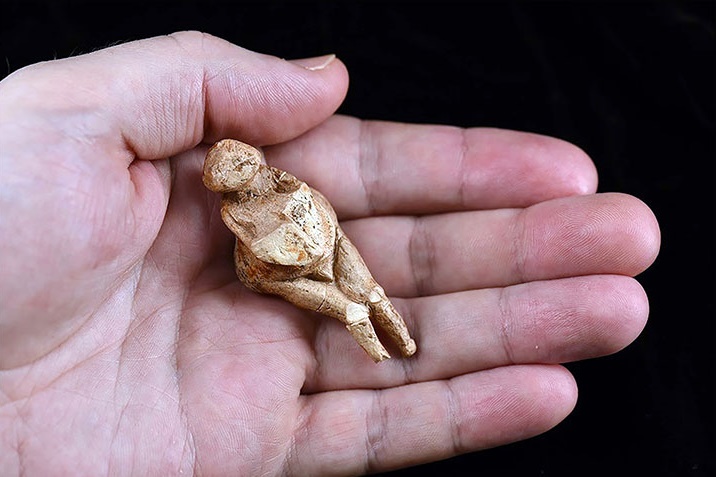
A stunning 23,000-year-old 'Venus' has been discovered in the Bryansk region of Russia, say scientists. The Palaeolithic beauty was carved from woolly mammoth tusk and shows a 'fantastically delicate' prehistoric woman.
The 23,000-year-old 'Venus' statue [Credit: Institute of Archaeology and Ethnography]
The rare find was made in the Bryansk region of Russia. Dr Konstantin Gavrilov, who led the expedition that discovered it.
"This statuette pictures a rather portly woman, but it looks fantastically delicate, probably due to the long and thin legs," enthused the scientist, from the Stone Age department of Moscow's Archaeology Institute.
The exceptionally rare Venus is made from 'a mammoth tusk [Credit: Institute of Archaeology and Ethnography]
It appeared to depict a "cult of fertility", said Dr Gavrilov, but then indicated this was impossible since it predated the existence of agriculture.
The 'Venus' is made from "mammoth tusk and it portrays a fat, maybe pregnant woman, with a big belly and bust," he said. "Part of the bust and belly has peeled off, along a natural crack in the tusk. But the rear view remains intact from 23,000 years ago."
Front and rear views of the 23,000-year-old 'Venus' statue [Credit: Institute of Archaeology and Ethnography]
"The figurine was found near large limestone layers and parts of mammoth bones that were painted with a mineral sienna paint. Most likely, the statuette was put next to the bones on the ground rather than 'buried' like other 'Venuses'' found in Russia."
"Most experts believed such prehistoric statuettes are 'ceremonial' and 'ritual' objects", he said. "Other 'Venuses' have been found in Russia, notably near Lake Baikal in Siberia, but on closer inspection some of these were, in fact, clothed."
The site where the figurine was found [Credit: Institute of Archaeology and Ethnography]
The latest find was made among bones of mammoths, bison, and flint stones in a 23,000 year old layer at archaeological site Khotylyovo-2.
Author: Will Stewart | Source: Daily Mail [April 17, 2017]
The remains of a medieval priest who died 700 years ago have been uncovered in an elaborate grave. Archaeologists from the University of Sheffield uncovered the rare find at Thornton Abbey in Lincolnshire, which was founded as a monastery in 1139 and went onto become one of the richest religious houses in England.
The 700 year old grave was found in Thornton Abbey, Lincolnshire [Credit: University of Sheffield]
The priest's gravestone was discovered close to the altar of a former hospital chapel. Unusually for the period, it displayed an inscription of the deceased's name, Richard de W'Peton -- abbreviated from 'Wispeton', a medieval incarnation of modern Wispington in Lincolnshire -- and his date of death, 17 April 1317.
The slab also contained an extract from the Bible, specifically Philippians 2:10, which reads; "that at the name of Jesus every knee should bow, of those in heaven, and of those on earth, and of those under the earth."
The discovery of Richard's grave was made by University of Sheffield PhD student Emma Hook, who found his skeletal remains surrounded by the decayed fragments of a wooden coffin.
Examination and recording of the skeletal remains of Richard de W'Peton [Credit: University of Sheffield]
"After taking Richard's skeleton back to the laboratory, despite poor preservation, we were able to establish Richard was around 35-45 years-old at the time of his death and that he had stood around 5ft 4ins tall," said Emma.
"Although he ended his days in the priesthood, there is also some suggestion that he might have had humbler origins in more worldly work; his bones show the marks of robust muscle attachments, indicating that strenuous physical labour had been a regular part of his life at some stage.
"Nor had his childhood been easy; his teeth show distinctive lines known as dental enamel hypoplasia, indicating that his early years had been marked by a period of malnutrition or illness."
The coffin lid [Credit: University of Sheffield]
In order to further investigate Richard's health, researchers in the Department of Archaeology produced a 3D scan of his skull. The model produced enables detailed features of the skull to be seen with much more ease than with the naked eye.
This revealed a potentially violent episode in the priest's past: a slight depression in the back of his skull shows evidence of an extremely well-healed blunt force trauma suffered many years before Richard's death.
None of the investigations shed light on the cause of his demise at a relatively young age, however there is one possibility that researchers are exploring.
Dr Hugh Willmott from the University of Sheffield said it was very likely that the priest was held in extremely high regard [Credit: University of Sheffield]
Dr Hugh Willmott from the University of Sheffield's Department of Archaeology, who has been working on the excavation site at Thornton Abbey since 2011, said: "2017 marks not only the 700th anniversary of Richard's death, but also that of a catastrophic event that is now largely forgotten, but caused years of suffering for the whole of Europe: the Great Famine of 1315-1317.
"Triggered by a whole spring and summer of relentlessly heavy rain that caused widespread crop failures -- which vastly depleted the availability of grain for humans and hay or straw for animals -- this was a period of mass starvation.
"Although not on the same scale as the Black Death, which devastated Europe from 1346-1353 and which also left its mark at Thornton Abbey, these hungry times struck rich and poor alike, killing millions across the continent."
The priest's teeth show signs of malnutrition, which leads scientists to believe he may have died in the Great Famine [Credit: University of Sheffield]
He added: "By spring 1317, when Richard died, the crisis was at its peak and its events would undoubtedly have affected medieval hospitals like Thornton Abbey, and the priests who served there.
"These institutions traditionally cared for the poor and hungry as well as the sick, so during the Great Famine sites like Thornton would have found themselves on the front line. Richard would have ministered to the starving, working in the face of desperately limited resources -- and perhaps despite these efforts, he too succumbed to the natural disaster that was unfolding around him.
"For now, such a narrative can only be a matter of speculation, but it does seem clear that -- whatever caused his death -- at the end of his days Richard was held in high regard, afforded an elaborate burial in the most prestigious part of the hospital chapel, in the very place he would have spent his final years working among the poor and dying."
The skull showed a serious head injury which had healed [Credit: University of Sheffield]
This is the latest significant archaeological find at Thornton Abbey in Lincolnshire. Last year a mass burial of bodies, known to be victims of the Black Death, was discovered at the hospital. A total of 48 skeletons, many of which were children, were found by the excavation team including PhD and undergraduate archaeology students.
Italian police say a tourist from Ecuador has been cited for inscribing the names of his son and wife and "2017" inside the ancient Roman Colosseum.
A woman walks past a writing inscribed on a wall inside the Colosseum, Tuesday, April 11, 2017. Italian police say a tourist from Ecuador has been cited for inscribing the name of his son and wife and the year, 2017, on Monday, April 10, 2017 inside the ancient Roman Colosseum. Carabinieri Major Lorenzo Iacobone said the tourist was observed in the act of vandalism by an official tour guide, who reported it to police [Credit: AP/Alessandra Tarantino]
Rome Mayor Vriginia Raggi denounced the alleged vandalism in a Twitter message on Tuesday, writing "Rome deserves respect. Whoever harms the Colosseum, harms all Romans and all who love the city."
Carabinieri Major Lorenzo Iacobone says the tourist was observed in the act of etching by an official tour guide, who reported it to police.
A view of a writing inscribed on a wall inside the Colosseum, Tuesday, April 11, 2017. Italian police say a tourist from Ecuador has been cited for inscribing the name of his son and wife and the year, 2017, on Monday, April 10, 2017 inside the ancient Roman Colosseum. Carabinieri Major Lorenzo Iacobone said the tourist was observed in the act of vandalism by an official tour guide, who reported it to police [Credit: AP/Alessandra Tarantino]
It will be up to a judge to determine a penalty. In the past, tourists cited for defacing ancient sites have been handed fines as stiff as 20,000 euros ($21,000.)
Labor unions have complained about a lack of personnel to prevent visitors from leaving their marks on antiquities.
Scientists from the environmental pollution control laboratory of the Aristotle University of Thessaloniki collected for the first time samples of solid deposits from the Arch of Galerius - or “Kamara” as it is locally known - in Thessaloniki, to establish the degree of damage caused by air pollution.
Arch of Galerius, Thessaloniki [Credit: WikiCommons]
The project is organized in cooperation with the Thessaloniki Ephorate of Antiquities. Chemistry professor Konstantina Samara, who is also head of the laboratory at AUT, said in an interview that particulate matter is deposited on the monuments and the ingredients they contain accelerate the deterioration of monuments, especially those made of marble.
"We collected samples of solid deposits and crust to make specific analyzes - chemical, morphological, mineral/chemical – to provide some useful information to the Ephorate who will judge when and if the monument needs new conservation work,” she said.
Detail of frieze from the Arch of Galerius, Thessaloniki [Credit: WikiCommons]
Samara said the lab will also examine the evolution of air quality through time because the atmospheric pollutants do not remain at levels they were at 20 years ago, like sulfur dioxide.
“We want to examine the relationship between air pollution and the damage observed at the monument,” she said, adding that the answer to this question will help any new conservation project for the Arch.
The 4th-century monument was commissioned by Roman Emperor Galerius along with the neighbouring Rotunda to celebrate the victorious campaign against the Sassanid Persians in 298 A.D. and the capture of their capital Ctesiphon.
The European Commission is allocating almost €50 million from the European Regional Development Fund to the continuation of the renovation and preservation works on the iconic Italian archaeological site.
Restoration crews work on a building at the ancient Roman city of Pompeii [Credit: Carlo Hermann/AFP/Getty]
After the completion of the restoration works co-financed by the EU Cohesion Policy, the Ancient Roman city of Pompeii, classified as a UNESCO World Heritage Site, is expected to welcome almost 200 000 additional tourists per year.
Regional Policy Commissioner Corina Creţu, who visited the project in February, said: "In Pompeii we restore and preserve works of art from the past, but we are really doing it for our future; so our grandchildren can enjoy this unique site, part of our common History and cultural identity. And we are also contributing significantly to the economic development of the Campania region, by boosting tourism and entrepreneurship."
The €50 million investment package finances the consolidation of the structures and ancient buildings of the archaeological site in order to restore its urban character, the construction of a water canalisation and drainage system, other restoration and enhancement works as well as training for the staff.
Background
The EU started supporting renovation works in Pompeii in the 2000-2006 financial period, and adopted the Pompeii "major project", worth €105 million overall, in 2007-2013. Today's decision will allow this project to be completed with funds from the 2014-2020 period.
The UNESCO site of Pompeii has been under excavation to varying degrees since 1748. Exposure of the excavated site as well as poor excavation techniques mean that the site has deteriorated over time.
The Pompeii major project aims to stop and reverse the deterioration of the site while consolidating disparate sites into a single excavated area. In 2016, the site was also made wheel chair accessible, with the help of EU funds.
Archaeologists and scientists from the Universities of Bristol and Durham and the British Museum are using cutting edge technology to crack a conundrum surrounding the ancient trade in ostrich eggs.
Carved ostrich egg from Isis Tomb, Vulci (Etruria), BM1850, 0227.6 [Credit: T. Hodos/Trustees of the British Museum]
Decorated ostrich eggs were traded as luxury items from the Middle East to the Western Mediterranean during the Iron Age (1200-300 BC).
Several beautiful examples -- both intact and in fragments -- have been part of the British Museum's collection since the nineteenth century.
The eggs were engraved, painted and occasionally embellished with ivory, precious metals and faience fittings. They were found in elite contexts from Spain to Iraq.
The research team wants to find out where the eggs were laid and whether the birds laying them were wild or captive.
Dr Tamar Hodos, Reader in Mediterranean Archaeology at the University of Bristol's Department of Archaeology and Anthropology, said: "Apart from noting their presence as unusual vessels in funerary and celebratory settings, surprisingly little is known about where they actually come from or who decorated them, much less how they circulated."
Carved and painted ostrich egg showing hoplites, BM1850, 0227.9 [Credit: Trustees of the British Museum]
Using the British Museum's collection of ostrich eggs from the Mediterranean and Middle East, isotopic analyses of strontium, oxygen and carbon in the eggshells are being used to investigate where the eggs were laid and whether the ostriches were captive or wild, by detecting what and where the mother was eating and drinking during ovulation.
Detailed study of the eggshells' intricate decoration via scanning electron microscopy will allow the research team to compare carving techniques, helping them understand how they were created.
Dr Alexandra Fletcher, Curator in the Middle East Department at the British Museum, said: "We really want to find out more about how this trade worked. Were eggs gathered from nests in the wild, given that this was a potentially dangerous activity? Or is it possible that ostriches were kept in captivity to ensure the luxury trade had a supply of eggs readily available?"
The question of captivity is an important one. Images on objects such as cylinder seals from the same period show ostriches as dangerous and fierce creatures.
Ostrich eggshell fragment ready to be analysed under the Scanning Electron Microscope [Credit: A. Fletcher/Trustees of the British Museum]
One has an ancient king strangling an ostrich while the bird kicks him in the stomach, for example. It seems, however, that some members of these ancient societies were adept at catching and handling dangerous beasts.
The famous Assyrian reliefs at the British Museum show that royal 'lion hunts' were staged affairs. Captured lions were released from cages directly into the path of their hunters. Could the ostriches also have been captive creatures?
It is hoped that the information held in the ostrich eggshells themselves will tell us more about how they were obtained, decorated and traded, which will in turn reveal more about both the people who supplied these luxury goods and those who coveted them.
The oldest remains of the ancient city of Nea Paphos in Cyprus have been discovered by Polish archaeologists during excavations. Approximately 2,400 year old remains of walls and floors are located in the part of the city inhabited by its richest citizens.
The oldest traces of ancient Nea Paphos were discovered over a very small surface, making it difficult to reconstruct the ancient houses [Credit: Henryk Meyza]
Paphos is one of the most important archaeological sites in Cyprus. In the Graeco-Roman period, it served as the capital of the island. It was built in its western part at the end of the 4th century BC. Because of its importance, it is listed on the UNESCO World Heritage List.
"During the last excavation season we managed to reach some of the first buildings erected in this ancient city", said Dr. Henryk Meyza of the Institute of Mediterranean and Oriental Cultures of the Polish Academy of Sciences. His team conducts research in the residential district. The first excavation work here was performed in 1965 by Prof. Kazimierz Michałowski. The work of the mission of the Polish Centre of Mediterranean Archaeology of the University of Warsaw, currently headed by Dr. Meyza, is conducted in the same area.
The extensive and luxurious buildings located in the area studied by Polish archaeologists had been functioning for almost a thousand years, from the 4th century BC to the 7th century AD.
"From the beginning, they were erected on a regular grid of streets, which cut the area into about 100 by 35 m lots. The houses were rebuilt and erected in a similar way over successive decades. This was also because the construction of this district was preceded by the construction of a water drainage system in the stone substrate that was used throughout the history of the city", said Dr. Meyza.
Remains of a water tank [Credit: Henryk Meyza]
In recent years the efforts of the Warsaw team of Polish archaeologists in Cyprus (another team led by Prof. Ewdoksia Papuci-Władyka from the Institute of Archaeology of the Jagiellonian University studies the agora of the city) focused on excavations within one of the houses, referred to as the 'Hellenistic House' (due to the preliminary dating of the 4th century BC). As with other houses in the area, the layout was quite simple - the buildings centered around three courtyards, of which the main or central courtyard had a rectangular shape surrounded by a colonnade, with a garden in the middle.
"The house has been researched since the 1980s, but because of its large stylistic heterogeneity it has always been a mystery to us. It was only in recent years that we learned how many redevelopments and changes in its layout had taken place. The central part housed pools of different sizes, and the largest, square pool had a side length of about 7 m. The last phase of development, with the garden, was built only in the late 1st or early 2nd century AD, already in the Roman period", said Dr. Meyza.
While trying not to destroy the later walls, archaeologists attempted to get to the deepest layers, where the oldest buildings were hidden. It turned out that these were built in the times when the city was founded, i.e. at the turn of the 4th/3rd century BC (as is known from written sources).
The last king of the independent ancient Cypriot state of Paphos was the founder of this city noted Dr Meyza. Former residence (Palea Paphos, or Old Paphos) ceased to serve its purpose mainly because it no longer had access to the port. In the meantime, the new location (Nea Paphos, or New Paphos) had a convenient harbour, and then large piers were also built.
The "Hellenistic house" and "Theseus villa" - ancient buildings studied by the Polish team of scientists [Credit: Maciej Jawornicki]
The archaeologist emphasised that the discovered remains of the house of the first centuries of the city were "not aesthetically fascinating, but offered an insight into the contemporary architecture."
"The remains of the first houses erected within a residential area are not impressive in terms of craftsmanship. The floors were made of clay. Only in later houses they were replaced with stone slabs or meticulously made mosaics", said Dr. Meyza.
Unfortunately, researchers are unable to reconstruct what Neo Paphos might have looked like at the time of its foundation. Excavations are carried out only in those places that allow archaeologists to look under the surface without damaging the well-preserved remains of the walls from later times. These are mostly empty courtyards, but already on that basis archaeologists have managed to arrive at some conclusions.
"Over time, the new capital became the largest centre of the Hellenic fleet next to Alexandria in Egypt. At that time Cyprus had an extensive supply of timber for the construction of large ships, mainly cedars, and among other things for this reason it was a valuable asset to the Greek rulers of Egypt (ie., the Ptolemaic dynasty). They contributed to expanding the city and elevating its rank. However, the majority of visible remains come from later times", said Dr. Meyza.
The scientist estimates that various international archaeological missions operating for decades within Nea Paphos have studied at best 10 percent of the city area. "Many spectacular discoveries can still lie ahead", he concluded.
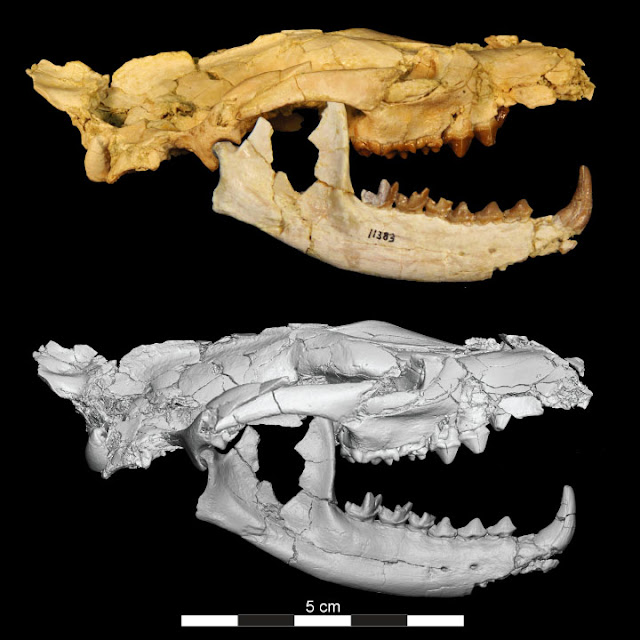
Led by scientists of the Senckenberg Research Institute and the University of Tübingen, the excavation team found the remains of a saber-toothed cat at the archaeological site in Schöningen. An examination of the skull fragments at the Dutch University of Leiden revealed the animal to be a representative of the European saber-toothed cat, Homotherium latidens. The recent discovery constitutes the third example of this large predatory cat from Schöningen.
Artistic rendition of Homotherium latidens [Credit: Mauricio Antón]
Long claws, razor-sharp, curved canine teeth and the size of a fully grown lion: the saber-toothed cat (Homotherium latidens) was a competitor as well as a dangerous predator that even posed a risk to the humans of its time.
"In the course of our excavation in May 2015, we came across conspicuous bone fragments," explains Dr. Jordi Serangeli, a scientist at the University of Tübingen and the excavation leader at the approximately 300,000-year-old archaeological site, and he continues, "In total, there are three individuals of Homotherium present in these relatively young sediment layers."
In-situ position of a skull fragment from the third Homotherium, which was discovered on 25 May 2015 at the archaeological dig in Schöningen [Credit: Univ. Tübingen/Senckenberg]
Until the first discovery of a saber-toothed cat in 2012 at the Schöningen excavation site in Lower Saxony it had been assumed that the large cats were already extinct about 200,000 years earlier, i.e., around 500,000 years ago. "Our findings show that 300,000 years ago, the saber-toothed cats were not as rare as previously thought," adds Serangeli.
During a restoration in 2016, André Ramcharan and Ivo Verheijen at the University of Leiden were able to reassemble the eleven bone fragments into an almost complete neurocranium. "We then compared the reconstructed skull with recent and already extinct species of large carnivores and were thus able to demonstrate that the remains represented the head of a European saber-toothed cat," explains Professor Dr. Thijs van Kolfschoten of the University of Leiden.
The bones were initially scanned, restored and subsequently reassembled with the aid of a computer [Credit: University of Leiden]
The third saber-toothed cat specimen that was discovered offers a great potential: thanks to the excellent level of preservation at the Schöningen dig, the interior of the skull reflects the shape and structure of the Homotherium brain. By examining the detailed brain structures, the team of scientists hopes to gain insights into the visual and hearing abilities as well as the feeding habits of the large cats.
"The third Homotherium from Schöningen is invaluable for our understanding of the European saber-toothed cat," summarizes Professor Nicholas Conard of the Senckenberg Centre for Human Evolution and Palaeoenvironment and head of the Institute for Early Prehistory and Quaternary Ecology at the University of Tübingen.
The reconstructed neurocranium of the European saber-toothed cat [Credit: Univ. Tübingen/Senckenberg]
In the near future the international team from the Schöningen project intends to publish the results of its interdisciplinary studies regarding the three saber-toothed cats discovered to date. "Moreover, we expect that future digs will produce additional Homotherium finds," offers Serangeli as a preview.
The dig in Schöningen keeps a team of ten members employed full-time -- and during the main excavation season, the team is joined by five to ten students, who support the scientific excavation. Worldwide, about 50 scientists from 30 institutions and a wide variety of disciplines are involved in researching the discoveries from Schöningen. The dig is financed by the State of Lower Saxony.
Technician André Ramcharan (University of Leiden, Netherlands) compares a find with the cast skull of a Homotherium [Credit: University of Leiden]
The spectacular new discovery is put on display for the public at the palaeon in Schöningen as part of the special exhibition "The Ice Age Huntress." Thanks to the close cooperation between Senckenberg, the international partners and the der palaeon GmbH, it is possible to make spectacular scientific findings available to the public in a timely manner.
Archaeologists have discovered a pair of ancient teeth in northern Italy that show evidence of primitive dental work, each containing an unusual hole that extends down to the pulp chamber.
A scan of the two teeth with bitumen filling [Credit: Stefano Benazz/New Scientist]
In what likely would have been a very painful procedure, researchers say the Ice Age ‘dentist’ used a sharp stone to remove diseased cavity tissue, and then filled the holes with the tar-like substance bitumen.
The teeth were discovered at the Riparo Fredian site in Italy, and are thought to date back to the Upper Paleolithic, between 13,000 and 12,740 years ago.
While a previously discovered set of teeth indicated that dental practices occurred as far back as 14,000 years ago, the researchers say the new find marks the earliest example of the use of a filling, according to a study published in the American Journal of Physical Anthropology.
In a microscopic analysis of the Ice Age teeth, which came from the same person, the researchers found scratches and other marks on the inner walls that would have come from something other than chewing.
Each of the teeth has a large, deep hole, indicating they had been ‘drilled’ into with a sharp object.
And, the researchers found evidence that they had once been filled with bitumen, a tar-like binding substance.
Humans developed therapeutic dental practices thousands of years before foods such as cereals and honey entered our diet [Credit: Gregorio Oxilia/New Scientist]
Along with this, they found bits of straw and what could be hair.
While it’s not yet clear what purpose these substances served, it’s thought that they may have been used as an antiseptic or to reduce pain.
Holes of this kind may also have been drilled for ornamental purposes, the researchers say, allowing for the insertion of jewelry.
But, the discovery of bitumen suggests the procedure was done out of medical necessity to remove decayed matter from the teeth and prevent further loss.
According to the researchers, this ancient patient lived before the widespread introduction of agriculture, when increased intake of high-carb, grain-based foods led to a rise in dental problems.
While the sample size is small, with just two teeth from the same person, the researchers say the find suggests dental care – including drilling and filling teeth – was widespread in the Ice Age.
The discovery ‘confirms the practice of dentistry – specifically, a pathology-induced intervention – among Late Pleistocene hunter gatherers,’ the authors wrote.
‘As such, it appears that fundamental perceptions of biomedical knowledge and practice were in place long before the socioeconomic changes associated with the transition to food production in the Neolithic.’
Until now, a heavy glass pane weighing approximately 80 kilos has prevented a valuable, centuries-old silk tunic attributed to Saint Ambrose from being restored in Milan. With a team of restorers and art transporters, an archaeologist at the University of Bonn has now managed to free the work of art, the tunic, from its heavy load, preserve the fabric and thus retain it for posterity.
Already in the early Christian church, relics were widespread. The religiously revered legacies of the saints also include, for instance, textiles. Valuable silk garments in Milan are thus attributed to Saint Ambrose. The patron saint of the city lived in the fourth century, and his remains rest there in the Basilica of Sant'Ambrogio, which bears his name. As bishop of the imperial residence of Milan, Ambrose pushed for the veneration of relics, and the Ambrosian chants, for instance, also date back to his time.
"The silk garments that are venerated as relics of the saint also include an exquisitely beautiful tunic," says Prof. Sabine Schrenk from the department of Christian Archaeology at the University of Bonn. The ravages of time have taken their toll on the valuable textile, yet it was not possible to perform new preservation work because the silk tunic has been stored in Milan for many years under a heavy glass pane weighing around 80 kilos. "The glass was intended to protect the relic," reports Schrenk. "However, the silk textile created waves underneath, and the great weight of the glass pane thus damaged the centuries-old fibers."
Experts have extensive experience with valuable silk textiles
Preserving the garment was a major challenge: how can the glass be removed from the silk cloth without it breaking or it tearing the fibers that have adhered to it? As Sabine Schrenk and the Colgne-based textile restorer Ulrike Reichert had already successfully preserved numerous silk fabrics in Sant'Ambrogio both of the experts have long been considering how such a tricky venture could succeed.
Schrenk and Reichert devised a plan with those in charge at Sant'Ambrogio, Abate Erminio de Scalzi and Monsignore Biaggio Pizzi, as well as with the curators of monuments from the diocese and city, Dr. Carlo Capponi and Dr. Antonella Ranaldi. The art transporting company APICE from Milan played an important role in this: well accustomed to shipping heavy paintings and sculptures, the experts led by Fabiano Panzironi took on the heavy task of transporting and lifting the glass pane installation.
The silk tunic measuring an impressive approx. 170 x 280 centimeters was stored in a drawer cabinet in the gallery of Sant'Ambrogio. However, this room was unsuitable for the preservation work. The transporters thus packed the glass panes with the valuable cargo between two large wooden boards, and the huge artwork was then carried vertically along the narrowest, winding corridors into the basilica's archive, which was transformed into a workshop for a month. "This transportation was highly risky," reports the restorer Ulrike Reichert. In some places, the art transporters had to proceed millimeter by millimeter to ensure the transit was ultimately successful.
A sandwich made from wood, glass and silk tunic
Once they arrived in the workshop, the six art transporters heaved the glass, silk tunic and wood sandwich onto a large table. The most dangerous moment of the preservation was now imminent. While the art transporters lifted the glass pane very slightly using suction handles, Ulrike Reichert used a flat stick to very carefully separate adhering parts of the silk tunic from the glass pane square centimeter by square centimeter. "This work took a long time -- for the helpers, it was a feat of strength to keep the heavy pane in the air the whole time," says Schrenk.
Then came the key moment: will the upper glass pane break when lifted and tear the tunic? Very carefully, the specialists lift the heavy pane centimeter by centimeter using the suction handles. The silk fibers remain intact! The carriers quickly lift the glass pane to one side and place it down on the table. The valuable fabric is now accessible for preservation. The fine silk fibers are carefully freed from dust and the valuable tunic is then protected against environmental influences with a lightweight acrylic glass. "The success shows that it was right to take the gamble," says Schrenk. "The great team mastered this challenge together."
The discovery in 2015 that theremains of the teenage Egtved Girl discovered in Denmark were not in fact Danish caused an outcry. Partly because this Danish Bronze Age icon turned out not to be Danish after all, and partly because she demonstrated that Bronze Age people travelled far and wide—including women. And the discovery raised one important question: were there others like her?
Skrydstrup Woman was discovered in Denmark in 1935. She is one of the best preserved Bronze Age bodies in Denmark, alongside Egtved Girl, who was discovered close by. Both women are now known to have travelled across Europe to reach Denmark [Credit: The National Museum of Denmark]
Archaeological scientists from the National Museum of Denmark can now say, yes, there were. They have discovered that a woman who was buried in Skrydstrup, southern Jutland in west Denmark, around 1300 to 1200 BCE, was not Danish.
Analyses suggest that she could have come from south Germany, France, Sweden, or The Czech Republic, and researchers are now trying to pinpoint her exact origins to see just how far she may have travelled.
It opens up for a new understanding of the European Bronze Age, says Professor Karin Frei from The National Museum of Denmark who is behind the discovery.
“We can’t say with 100 per cent certainty where she came from, and we may never be able to, but she definitely wasn’t Danish. It gives us so many new perspectives. Now we know that Egtved Girl was not an isolated case,” says Frei.
Similarities with Egtved Girl
Egtved Girl and Skrydstrup Woman lived at approximately the same time period and both died at a young age--16 to 18 years. They were both buried in oak coffins under a burial mound, which was an elite way to be buried. And they were both foreigners. But this is where the similarities end.
Egtved Girl's grave, from 1370 BC [Credit: The National Museum of Denmark]
Egtved Girl was a frequent traveller in her later years, and only spent a short period of her life at Egtved--probably only a few months--where she died. But Skrydstrup Woman made just one long journey before she died and was buried in what is now Denmark.
It is now clear that she came to Skrydstrup at the age of around 13 or 14, which was considered a marriageable age for girls, and that she lived here until she died. Unlike Egtved Girl, there is nothing in the analyses of her hair, teeth, or nails that suggests she suffered from a prolonged period of illness or malnutrition.
She was buried in the centre of a burial mound. Two men, whose relation to her is not yet known, were found buried on the side of the same mound. All of this points to a woman of great importance.
Skrydstrup Woman was an elegant queen-like figure
Alive, Skrydstrup Woman would have been striking. She was approximately ten centimetres taller that most other women with long, thick hair tied up in an intricate fashionable style, which would have added a further ten centimetres to her already impressive height.
Skrydstrup Woman was buried in an oak-coffin, which helped to preserve her remains [Credit: The National Museum of Denmark]
She dressed in beautifully embroidered clothes, with big gold earrings draped over each ear. She had long, sleek limbs, and would have wanted for nothing her entire life.
“I see a very elegant woman. A queen-like figure. I’ve no doubt that when she came in through the door, people thought “wow”,” says Frei.
Srontium reveals our origins
Frei is world-renowned for developing an analytical method to measure the ratio of strontium in a person’s hair and nails, or textiles. She has now applied the method to Skrydstrup Woman.
Recreation of Skrydstrup woman's hairstyle [Credit: Oldtidsllimt/Museum Sønderjylland]
Strontium is found naturally in soils and water, and enters the food chain via plants, the animals that eat them, and so on, until it ends up in people. The composition of the different types of strontium—so-called isotopes—contained in an individual’s teeth, nails, and hair, is directly related to the soils, plants and animals, where they live.
By analysing the strontium isotopic composition of an individual and comparing that with known compositions for different parts of the world, scientists can decipher where an individual may have came from and lived throughout their life.
Archaeologists already knew quite a lot about Skrydstrup Woman’s life.The area where she was buried is known to have been a centre of wealth, due to the large number of Bronze Age burial mounds and impressive long-houses that have been excavated in the area. Lots of bronze and gold have also been found in the area.
A reconstruction of how Skrydstrup woman's impressive house may have been decorated [Credit: Oldtidsllimt/Museum Sønderjylland]
Close to where Skrydstrup Woman was buried, archaeologists have discovered two large long-houses. One of which is the largest known “three-aisled” houses from the early Bronze Age—it was 500 square metres in size.
Archaeologists had thought that Skrydstrup Woman’s grandparents or great-grandparents built the house, but the new results overturn that interpretation.
A young girl travelled to make an alliance
Skrydstrup Woman was originally discovered in 1935. The inner part of the mound, which was dedicated to her, was 13 metres in diameter, according to Museum Sønderjylland. It was later covered by a larger grave, in which two men were buried. The burial itself is an important part of Skrydstrup Woman’s story, says Frei.
A quick overview of Skrydstrup Woman and Egtved Girl: where they were discovered and where they
may have come from [Credit:ScienceNordic/Charlotte Price Persson/Mette Friis-Mikkelsen]
“Skrydstrup Woman travelled once and stayed in the Skrydstrup area the rest of her life. So perhaps she came to make an alliance. That could have been through marriage, but we don’t know. And we don’t know who the two men were. We can only tell that it was possible for women to travel and that people could integrate quickly into that society. Otherwise you wouldn’t have been buried in this way,” says Frei.
Skrydstrup Woman probably died of an infection
Analyses of Skrydstrup Woman’s bones reveal her age and sex, but also whether she had suffered from a period of prolonged illness, malnutrition, or stress.
Analyses of Skrydstrup Woman’s teeth and hair show that she only made one long journey during her life [Credit: Charlotte Price Persson]
“We haven’t found any signs of chronic disease. On the contrary, her bones indicate that she was probably a well-nourished girl,” says post-doc Marie Louise Jørkov, from the Department of Forensic Medicine at the University of Copenhagen, Denmark, who conducted the analyses.
“In all probability she probably died of an infection: flu or some virus that did not show up in her skeleton. It would show up in the blood, which obviously isn’t preserved today,” says Jørkov.
Skrydstrup Woman’s bones are witness to her impressive height, which would have been around 170 centimetres tall, says Jørkov.
“The bones were very long, she was certainly a tall girl compared with her contemporaries. We don’t have many other finds, because people began cremating their dead not long after this. But we can see in corresponding discoveries for example from Borum Eshøj [another Bronze Age burial mound in Denmark] that they had shorter and more robust bones,” she says.
Part of a larger project investigating women's roles in Bronze Age societies
The results have been submitted to a scientific journal and will now go through a peer review before they are published. ScienceNordic will follow up with Frei and her colleagues progress.
In the meantime, the archaeologists will continue with the project Tales of Bronze Age Women, in which Frei and her colleagues are studying a number of well-preserved oak-coffins of Bronze Age women to investigate their role in Bronze Age society.
This approach is “fruitful” says archaeologist Professor Helle Vandkilde from Aarhus University, Denmark.
“Oak-coffins are such fantastically well-preserved source materials that make it possible to focus on each individual to an exceptional degree. This biographical perspective is especially new and exciting,” she says.
Vandkilde is not involved in the project herself and has not yet seen the unpublished results, but she is familiar with Frei’s work in general. While the precise interpretation of Skrydstrup Woman’s origins are not yet a done-deal, one thing is clear she says: both Egtved girl and Skrydstrup Woman have “definitely travelled.”
Frei is now planning to investigate some of the other well-preserved burials in Denmark.
Next on the list are the individuals buried at Borum Eshøj mound in Central Jutland, which contained the remains of an older woman, and two men. Only time will tell if this woman also travelled from far away.
“Suddenly, these women have a much larger role in this society, because they're outsiders with new knowledge and know-how that would have been of great value. I’m beginning to think that they had a greater importance than we have previously attributed to them. But all of that still remains to be seen,” says Frei.
Author: Charlotte Price Persson | Source: ScienceNordic [April 11, 2017]
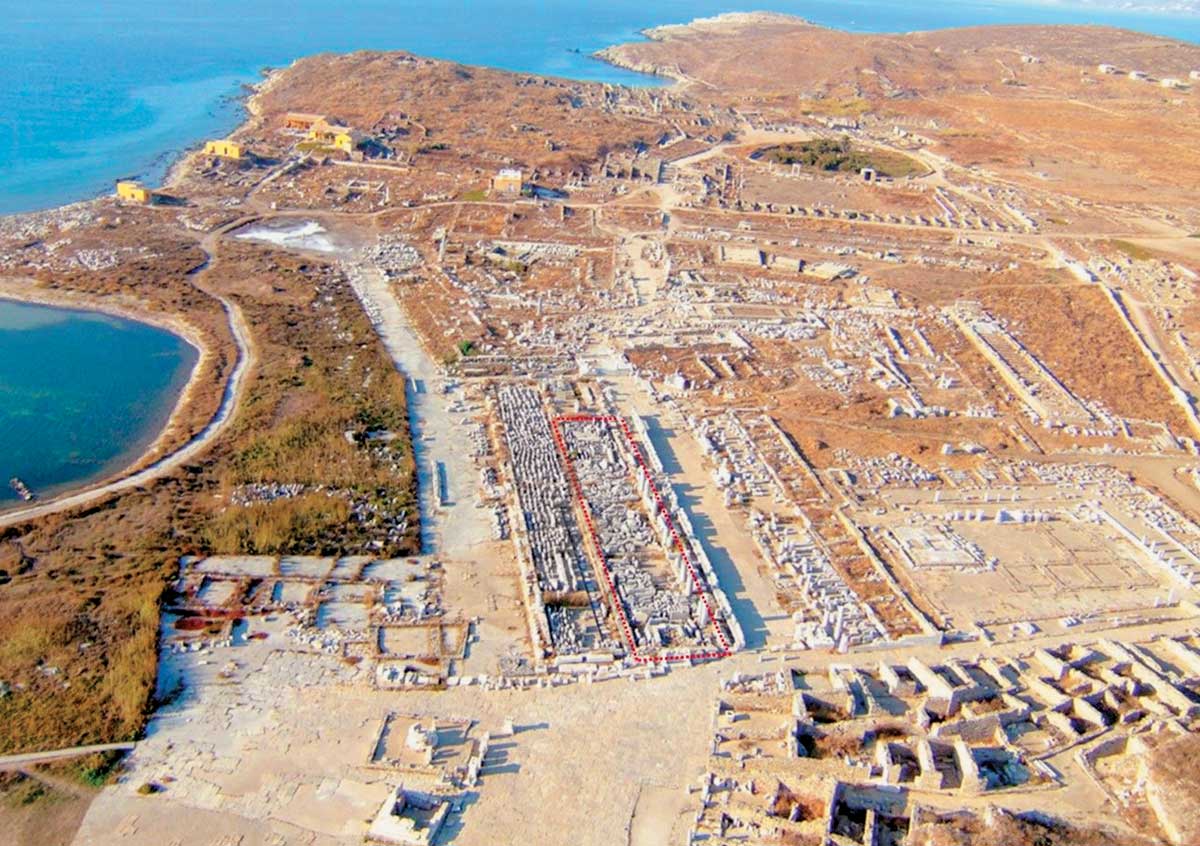
Greece's Central Archaeological Council on Sunday gave the go-ahead to a project to help restore some of the most important monuments on the island of Delos, using a grant donated by the Paul and Alexandra Canellopoulos Foundation.
Aerial view of the Stoa of Philip V in Delos [Credit: Ethnos]
The project will launch a new era for the 'sacred isle' of Delos, which was considered the most important sanctuary of antiquity and the birthplace of the gods Apollo and Artemis. The project will begin with the Stoa of Philip V, which is one of the first monuments that a visitor comes across but also the hardest to understand, since it is missing its '3rd dimension'.
The Cyclades Antiquities Ephorate, using the 550,000-euro donation from the Kanellopoulos Foundation, will now take action to restore the damage and the result of wear caused by salt water to the various architectural elements on the ground.
According to the head of the Cyclades Antiquities Ephorate Dimitris Athanasoulis, the restoration work on Delos - as in the case of the Philip V Stoa - was essential for the protection of the monuments, not just to help visitors understand them.
"Delos is a small island, where the salt corrodes everything. Architectural elements in such a hostile environment degenerate rapidly. Their restoration on the monument will greatly reduce the wear," he said.
While the urban neighbourhoods on Delos were well-preserved, Athanasoulis said, the same was not true of the sanctuary. He said the Ephorate's strategy was to use EU and state funds on the "emergency" projects and try to find sponsors and grants for the rest. He pointed out that the needs on Delos, due to the special conditions prevailing on the island, were similar to those in Pompeii where millions of euros in European funds were given each year.
Archaeologists have discovered a dwelling from the time of the Bronze Age in the Lúčna district in Detva. An archaeological company from Banská Bystrica was exploring the land under planned family houses, when the ground plan of a house, five metres wide and 8 and half metres long, was discovered.
Archaeologist Roman Hrončiak stands by a post hole of the Bronze Age farmhouse [Credit: Jozef Poliak, TASR]
Archaeologist Roman Hrončiak supposed to find settlement holes, but the real discovery surprised him. The discovery of the dwelling is significant not only for Detva but for whole region, according to the archaeologist.
Until now, only holes were found in Detva but it was unable to define them as a settlement. This is the first time a settlement where people had been living a thousand years before Christ has been confirmed in the area.
Reconstruction of the Bronze Age farmhouse discovered in Detva [Credit: Jozef Poliak, TASR]
In 2016 Noemi Beljak Pažinová confirmed the existence of a prehistoric settlement in Lúčna during her research when she found a small hearth last year.
In the prehistoric house, the archaeologists and volunteers also uncovered fragments of receptacles for the preparation and serving of food. Some fragments are more luxurious with polished surfaces.
Both archaeologists agree that dwellers of this area probably supplied the fortified settlement of Kalamárka, the oldest known archaeological locality of central Slovakia, 5 kilometres from Detva.