A team of specialists that included scientists from Siberia, the Urals, and the University of Arizona conducted radiocarbon dating of the teeth and bones of ancient porcupines found in the caves of Gorny Altai and the Urals. They established that these thermophilic animals lived in these territories 30,000 to 40,000 years ago and died out with the onset of the Last Glacial Maximum.
 |
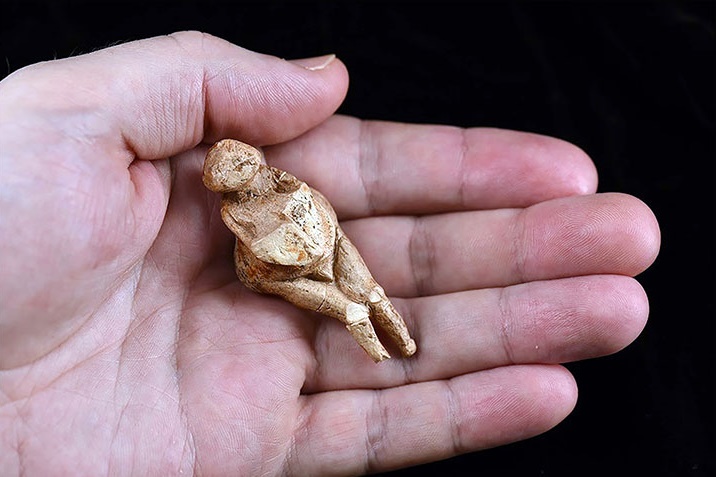
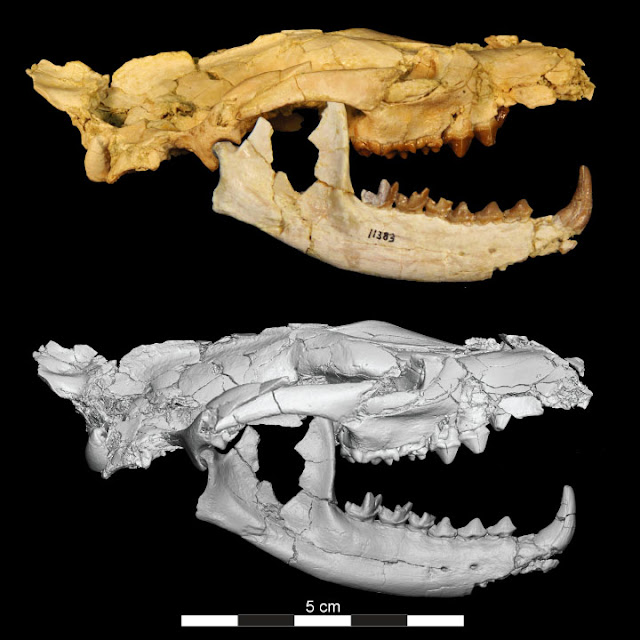
| Porcupine bones and teeth [Credit: Yaroslav Kuzmin] |
"There have been no similar publications based on Russian material," says Yaroslav Kuzmin of TSU, one of the authors of the article. "The reason is that the finds of porcupines in Siberia are extremely rare. The samples with which we worked were discovered by the famous Siberian paleontologist Nikolai Ovodov in the 1980s in the Altai (Razboynichya Cave). Later, in the 1990s and early 2000s, bones and teeth that were preserved in several caves of Altai and the Urals were added to them."
All this time, the age of ancient porcupines remained unknown, because the method of dating available to scientists required a large quantity of material for analysis.
"This method was not suitable for us," says Yaroslav Kuzmin. "First, in this case, material invaluable from the point of view of history will be completely lost in the course of dating. Second, the maximum size of the remains of animals found was only a few centimeters, so we simply did not have enough materials for analysis. Unique finds were preserved only because they were lying in caves of limestone, often at a temperature of about zero degrees, that is, they were not exposed to such destructive factors as heat, wind, and rain."
Therefore, the researchers were only recently able to reconstruct the past and establish the age of ancient mammals. This happened thanks to the close scientific collaboration of scientists from Russia and the US. The University of Arizona conducted a direct radiocarbon dating of porcupine bones and teeth with an accelerator mass spectrometer. This method requires a minimum amount of material (less than the fingernail of the little finger) but is an accurate way to determine geological age.
The results of the study showed that the fossils of porcupines living in the area of the modern Urals are more than 40,000 years old. Their Siberian relatives were significantly younger, from about 30,000 to 40,000 years ago. In the area that is now Russia, porcupines lived during an interstadial period, between two glacial maxima. According to the authors of the article, about 27,000 years ago, the cooling began, which changed the situation in the Altai Mountains: Forests decreased, the temperature and precipitation decreased, and the area occupied by grasses and bushes and other foliage increased. The conditions became unsuitable for the habitation of thermophilic mammals, and as a result, the porcupines permanently disappeared from the region.
More information about the results of the research can be found in the journal
Quaternary Science Reviews.
Source: National Research Tomsk State University [April 06, 2017]A team of specialists that included scientists from Siberia, the Urals, and the University of Arizona conducted radiocarbon dating of the te...