Header

Modul
Showing posts with label USA. Show all posts

Wednesday, April 19, 2017


The Cleveland Museum of Art and The Ministry of Cultural Heritage and Activities and Tourism of the Republic of Italy (Ministry) today announced that they have reached an agreement for the transfer of an early 1st century AD marble portrait head of Drusus Minor (Drusus Julius Caesar, 13 BC-AD 23) to the Republic of Italy.

Cleveland Museum of Art to transfer Roman sculpture of Drusus Minor to Italy
Head of Drusus Minor (13 BC-AD 23), probably after AD 23 and likely before AD 37. Roman, 1st cent. 
Marble; overall: h. 35 cm (13 3/4 in) [Credit: The Cleveland Museum of Art]
The sculpture, previously sold at a public auction in Paris in 2004, was acquired by CMA in 2012, after extensive research to confirm its ownership history. When the museum acquired the work, it was believed that the sculpture originally came from North Africa. When, more recently, CMA became aware of the fact that the sculpture may have been illicitly removed from a site near Naples towards the end of World War II, the museum promptly contacted the Ministry. Acting in cooperation with officials of the Ministry, and with the assistance of the Carabinieri for the Protection of Cultural Heritage, CMA was able to confirm the World War II events. As a result, CMA determined to transfer the sculpture to Italy

In 2008, the Cleveland Museum of Art entered into a cultural cooperation agreement with the Ministry that formed the basis for a new relationship between CMA and the Republic of Italy. That agreement also provided a framework for the museum to approach the Ministry and obtain the information necessary to allow the museum to decide to transfer the sculpture.

“We have had an excellent relationship with the Ministry for many years,” said William Griswold, CMA director. “When we became aware of facts that were inconsistent with our understanding of the provenance of the sculpture, contacting the Ministry directly was an easy decision in light of our many years of working with our Italian colleagues. We worked collaboratively with the Ministry first to determine the circumstances of the work’s removal and then to finalize the decision to transfer the work.”

"This return is the result of an important and fruitful cultural agreement and the full cooperation of CMA with the Italian authorities,” said the Minister of Cultural Heritage and Activities and of Tourism, Dario Franceschini. “Now we await the return of the work, which, once in Italy will be returned as soon as possible to Naples and its communities, from where it was removed."

Source: The Cleveland Museum of Art [April 19, 2017]

Cleveland Museum of Art to transfer Roman sculpture of Drusus Minor to Italy

The Cleveland Museum of Art and The Ministry of Cultural Heritage and Activities and Tourism of the Republic of Italy (Ministry) today annou...

Friday, April 14, 2017


Saber-toothed cats that roamed Los Angeles 12,000 years ago had many injuries to their shoulders and backbones that likely occurred when they killed large herbivore prey such as bison and horses, UCLA biologists report in the journal Nature Ecology and Evolution.

The dangers of being a saber-toothed cat in Los Angeles 12,000 years ago
In this illustration, saber-toothed cats pursue a bison. UCLA biologists say the cats sustained injuries to their backs 
and shoulders, likely as a result of attacks on their prey [Credit: Mauricio Anton]
Their Southern California contemporary, the dire wolf, was more likely to suffer from injuries to the head, neck, ankles and wrists, the researchers report.

"The difference in neck injuries between the two animals is dramatic," said lead author Caitlin Brown, a UCLA doctoral student in ecology and evolutionary biology. "The dire wolves had many neck injuries clustered together that could have resulted from the wolves being dragged by thrashing prey, as we see in modern wolves. In contrast, the saber-toothed cat has almost no neck or head injury, which implies that they were avoiding damage to their precious teeth."

Brown and another UCLA doctoral student in ecology and evolutionary biology, Mairin Balisi, analyzed more than 35,000 bones from saber-toothed cats and dire wolves over six months at the La Brea Tar Pits' George C. Page Museum. The researchers found injuries on 4.3 percent of all saber-toothed cat bones and 2.8 percent of all dire wolf bones.

Like modern gray wolves, dire wolves—which "are not made-up beasts for 'Game of Thrones,'" Brown said—were predators that caught and killed prey with their jaws. By contrast, saber-toothed cats (Smilodon fatalis), a species without close modern descendants, are thought to have ambushed large prey using powerful back and forelimb muscles to pull down and position the animals for killing bites. Saber-toothed cats were heavier than dire wolves, and are believed to have used their large forelimbs to pin down their prey.

"Consequently, we expected injuries in saber-toothed cats would likely be concentrated in the shoulder, anterior ribcage and spine, while those of dire wolves were likely to be more evenly distributed across all four limbs," said senior author Blaire Van Valkenburgh, a UCLA professor of ecology and evolutionary biology. "In addition, head injuries were likely to be more common in the dire wolves because they were at risk of being kicked while biting the hind­quarters during a chase. Caitlin and Mairin's analyses supported these conclusions."

While previous studies of these animals have demonstrated that injuries likely occurred during fierce battles, the UCLA biologists are the first scientists to study enough bones to determine how frequently the injuries occurred.

The finding that saber-toothed cats sustained more frequent injuries than dire wolves suggests that the cats faced a much greater risk of injury over their lifetimes. It is thought that this is because the cats killed relatively larger prey and may have done so alone, rather than as part of a group. Instead of exhaust­ing their prey through a long pursuit, the cats ambushed prey at a short distance and immobilized them using their massive forelimbs before killing the prey with precisely positioned bites, the researchers said.

"Dire wolves hunted in packs, which were essentially a running set of jaws," Van Valkenburgh said. "They had to do everything with their mouths. So we expected to see injuries where they were kicked in the head, and maybe injuries in the limbs, either by being kicked or by tripping during a hunt."

Saber-toothed cats are not tigers, Balisi noted, and are only distantly related to modern cats.

The biologists studied only trauma, inju­ries that likely resulted from hunting. This trauma included fractures that had healed, severe or chronic muscle strain, and osteoarthritis.

Author: Stuart Wolpert | Source: University of California, Los Angeles [April 14, 2017]

The dangers of being a saber-toothed cat in Los Angeles 12,000 years ago

Saber-toothed cats that roamed Los Angeles 12,000 years ago had many injuries to their shoulders and backbones that likely occurred when the...

Thursday, April 13, 2017


Move over, honeybee and seagull: it's time to meet Moabosaurus utahensis, Utah's newly discovered dinosaur, whose past reveals even more about the state's long-term history.

Moabosaurus discovered in Utah's 'gold mine'
BYU researcher Brooks Britt with the newly discovered Moabosaurus, on display 
at BYU's Museum of Paleontology [Credit: Jaren Wilkey, BYU]
The Moabosaurus discovery was published this week by the University of Michigan's Contributions from the Museum of Paleontology. The paper, authored by three Brigham Young University researchers and a BYU graduate at Auburn University, profiles Moabosaurus, a 125-million-year-old dinosaur whose skeleton was assembled using bones extracted from the Dalton Wells Quarry, near Arches National Park.

BYU geology professor and lead author Brooks Britt explained that in analyzing dinosaur bones, he and colleagues rely on constant comparisons with other related specimens. If there are enough distinguishing features to make it unique, it's new.

"It's like looking at a piece of a car," Britt said. "You can look at it and say it belongs to a Ford sedan, but it's not exactly a Focus or a Fusion or a Fiesta. We do the same with dinosaurs."

Moabosaurus discovered in Utah's 'gold mine'
BYU researcher Brooks Britt with the newly discovered Moabosaurus, on display 
at BYU's Museum of Paleontology [Credit: Jaren Wilkey, BYU]
Moabosaurus belongs to a group of herbivorous dinosaurs known as sauropods, which includes giants such as Brontosaurus and Brachiosaurus, who had long necks and pillar-like legs. Moabosaurus is most closely related to species found in Spain and Tanzania, which tells researchers that during its time, there were still intermittent physical connections between Europe, Africa and North America.

Moabosaurus lived in Utah before it resembled the desert we know -- when it was filled with large trees, plentiful streams, lakes and dinosaurs. "We always think of Moab in terms of tourism and outdoor activities, but a paleontologist thinks of Moab as a gold mine for dinosaur bones," Britt said.

In naming the species, Britt and his team, which included BYU Museum of Paleontology curator Rod Scheetz and biology professor Michael Whiting, decided to pay tribute to that gold mine. "We're honoring the city of Moab and the State of Utah because they were so supportive of our excavation efforts over the decades it's taken us to pull the animal out of the ground," Britt said, referencing the digs that began when he was a BYU geology student in the late '70s.


A previous study indicates that a large number of Moabosaurus and other dinosaurs died in a severe drought. Survivors trampled their fallen companions' bodies, crushing their bones. After the drought ended, streams eroded the land, and transported the bones a short distance, where they were again trampled. Meanwhile, insects in the soils fed on the bones, leaving behind tell-tale burrow marks.

"We're lucky to get anything out of this site," Britt said. "Most bones we find are fragmentary, so only a small percentage of them are usable. And that's why it took so long to get this animal put together: we had to collect huge numbers of bones in order to get enough that were complete."

BYU has a legacy of collecting dinosaurs that started in the early 1960s, and Britt and colleagues are continuing their excavation efforts in eastern Utah. Moabosaurus now joins a range of other findings currently on display at BYU's Museum of Paleontology -- though, until its placard is updated, it's identified as "Not yet named".

"Sure, we could find bones at other places in the world, but we find so many right here in Utah," Britt said. "You don't have to travel the world to discover new animals."

Author: Brooke Adams | Source: Brigham Young University [April 13, 2017]

Moabosaurus discovered in Utah's 'gold mine'

Move over, honeybee and seagull: it's time to meet Moabosaurus utahensis, Utah's newly discovered dinosaur, whose past reveals even ...

Tuesday, April 11, 2017


Researchers have found signs of fault displacement at well-known rock outcrops in Colorado that mark the end-Cretaceous asteroid impact that may have hurried the extinction of the dinosaurs. They will present their results in a poster at the 2017 Seismological Society of America's (SSA) Annual Meeting.

Could a Colorado earthquake have been triggered by dinosaur extinction impact?
Longs Canyon area of Colorado's Trinidad Lakes State Park [Credit: WikiCommons]
Norm Sleep of Stanford University and colleagues suggest that the impact, which occurred near the Yucatán Peninsula of Mexico, could have generated massive seismic waves that triggered earthquakes as far away as Colorado, in the center of a tectonic plate where no previous fault had existed.

Sleep and his colleagues found evidence for the fault in two areas in Colorado's Trinidad Lakes State Park, where a layer of iridium generated by the asteroid impact clearly marks the boundary between Cretaceous and Tertiary-age rocks, at the time of the dinosaurs' extinction about 65 million years ago. At the Long's Canyon and Madrid Canyon roadcuts, "there is a fault that slipped about a meter at the time of the impact," Sleep said. "It offset the material below the impact layer but not above, but it's not something that would be obvious to the casual observer."

The researchers suggest that the Colorado earthquake may have been as large as magnitude 6. Very strong seismic waves from the impact -- much larger than would be generated by a regular earthquake, Sleep said -- would be necessary to trigger an earthquake in this location, in the middle of a tectonic plate with no previous faults.

The end-Cretaceous asteroid strike, however, could have generated ground velocities of a meter or two per second, Sleep said. "The ground would be moving up and down and sideways like a ship in a strong storm."

At the time of the earthquake, the area in Colorado was a swampy, delta-like environment, crossed by large braided streams that ran from the young Rocky Mountains. Sleep and his colleagues saw signs that the earthquake had diverted a small stream in the area.

This summer, the researchers will be checking in New Mexico near the Raton Basin for further signs of intraplate quakes that may have been triggered by the asteroid strike.

Source: Seismological Society of America [April 11, 2017]

Could a Colorado earthquake have been triggered by dinosaur extinction impact?

Researchers have found signs of fault displacement at well-known rock outcrops in Colorado that mark the end-Cretaceous asteroid impact that...

Monday, April 10, 2017


Reconstructed food webs from the Ancestral Puebloan southwestern United States show the complexity and interconnectedness of humans, other animals, crops and the environment, in an area of uncertain climate and resources, according to researchers, who think climate change and human decisions then, may shed light on future human choices.

Food webs entangle humans in complex relationships with animals, crops and the environment
Square Tower House in Mesa Verde National Park [Credit: Nate Crabtree]
"As southwestern archaeologists, we know that Ancestral Puebloan people were intrinsically connected to the environment," said Stefani Crabtree, postdoctoral fellow in human behavioral ecology in the Department of Anthropology, Penn State. "But, most food webs have omitted humans."

Traditionally, food webs, while they map the interaction of all the animals and plants in an area, usually do not emphasize the human component. Crabtree and colleagues created a digital food web that captures all categories of consumers and consumed, can be defined for specific time periods and can also represent food webs after major food sources or predators disappear from the area. If an area suddenly becomes devoid of deer or humans or corn, for example, a food web of that situation can show where predators went to find prey, or which prey thrived for lack of a predator.

These knockout food webs -- webs missing a specific predator or prey -- show the changes and pressures on the food sources substituted for the missing ones, or the changes that occur when pressure is removed by removing a major consumer. The researchers report the results of their study in the Journal of Archaeological Science.

"When people show up in the area around A.D. 600 they bring corn," said Crabtree. "It takes a while for critters to get used to it, but eventually, everything that eats vegetation, eats corn and prefers it."

Humans bringing corn into an area is a major disruption of the existing food web. Planting corn means clearing fields to displace whatever plants and animals were there, creating a high-energy plant source of food and switching plant eaters to the preferred higher-calorie food source.

In the American Southwest, the Ancestral Puebloan people eventually preyed on their deer population enough so that they deer were no longer a reliable source of food. To compensate for this, they began to domesticate turkeys for food. Turkeys need to be fed corn if they are captive and that competes with corn for human consumption. At this time, corn made up 70 to 80 percent of Ancestral Puebloans' food and so feeding turkeys altered the food web.

Food webs entangle humans in complex relationships with animals, crops and the environment
A sample food web with red nodes representing primary producers, orange nodes primary consumers, yellow-orange 
nodes omnivores, true-yellow nodes are true carnivores. This draft food web was created with the program 
Network3D from foodwebs.org [Credit: Stefani Crabtree, Penn State]
To create the food web, the team identified all the common, noninvasive species in the area. They then added species that were found in archaeological sites, but were absent from the modern lists. In some food webs, components are identified by their function, so all humming birds are considered flying pollinators, but in this case each type of humming bird received its own place in the web, linked to what it ate and what, if anything, ate it. This produced a very complicated web, but supplied exceptional redundancy.

"In the insect world it is harder to get at the data," said Crabtree. "We have not been able to get at good databases so we aggregate at the functional level -- pollinators or bloodsuckers for example."

The exception to individual web entries then are invertebrates -- insects, spiders, snails, etc. -- that were classified by their function. Invertebrates are organized to the level of order and then grouped by function. With insects, for example, the researchers would group butterflies and moths that pollinated and sipped nectar, together in one group.

The overall food web had 334 nodes representing species or order-level functional groups with 11,344 links between predator and prey.

The researchers realize that there are differences in the environment between now and the Ancestral Puebloan period, but many things, such as pinon-juniper woodlands and sage flats are the same. Enough similarity exists for this approach to work.

The team did not produce just one overall food web, but also food webs corresponding to three archaeological locations and three time periods of Ancestral Pueblo occupation in the area -- Grass Mesa Pueblo for Pueblo I, Albert Porter Pueblo for Pueblo II and Sand Canyon Pueblo for Pueblo III. They began with using archaeological assemblages from these sites incorporating all human prey and all human predators into the food web. Then they included the prey of the primary prey of humans and then predators of these human-prey species. Prey, in this case, includes animals, insects and plants.

Food webs entangle humans in complex relationships with animals, crops and the environment
A coyote preying on an entire clutch of baby rabbits in Boulder County, CO. [Credit: Mindy Wilkinson]
When creating knockout food webs, the researchers included only those species that were found in reasonable quantities in the archaeological assemblages at those times.

"Knockout food webs are one of the best ways to understand how people interact with the environment," said Crabtree. "Because we can remove something, predator or prey, and see what would happen."

When major changes in climate variables such as drought, heat and lack of snowpack are factored in, the balance in the food web may become unstable. When food becomes scarce, most mobile creatures, animals and insects move to another location. During the time of the Ancestral Puebloans, this was possible and eventually, these people moved to the area of the Rio Grande in New Mexico and other places in New Mexico and Arizona.

"We didn't have a long-term plan during the 600 years of Ancestral Pueblo habitation in the Mesa Verde region," said Crabtree. "We don't have a long-term plan today either. We don't even have a four-year plan. Some people are pushing us to look closely at climate change."

In the past, people migrated, said Crabtree. Unless we figure out better strategies, where are we going to migrate out to? We do not have a place to go, she said.

What people plant and eat has a great effect on the environment and on ecosystems. In the end, those choices will impact human survival, according to the researchers.

This work is part of a collaboration of researchers creating resolved food webs from a variety of places. Crabtree believes that she can compare this project to others that include humans in other geographical areas to help understand ecosystems with humans in them.

Author: A'ndrea Elyse Messer | Source: Penn State University [April 10, 2017]

Food webs entangle humans in complex relationships with animals, crops and the environment

Reconstructed food webs from the Ancestral Puebloan southwestern United States show the complexity and interconnectedness of humans, other a...

Saturday, April 8, 2017


Nimrud. Aleppo. Palmyra. Ebla. These ancient sites and many others in Iraq and Syria have found their way to the top of international news today, as the destruction of cultural heritage becomes both a by-product and a tactic of ongoing war throughout the region.
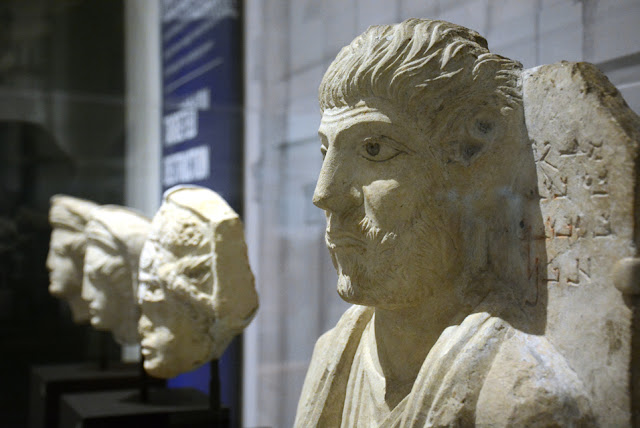
'Cultures in the Crossfire: Stories from Syria and Iraq' at the Penn Museum in Philadelphia, PA
Cultures in the Crossfire: Stories from Syria and Iraq features a set of 1st- and 2nd-century CE funerary portraits from 
Palmyra, which demonstrate the complexity and richness of Palmyrene identity [Credit: Penn Museum]
What is really at stake? Why does it matter? What is the human story that accompanies this unprecedented loss? And what is being done to prevent further loss of the material culture, vast human history, and diverse cultural identities in the region of the world long known as the “cradle of civilization”?

Cultures in the Crossfire: Stories from Syria and Iraq, a new special exhibition at the Penn Museum opening April 8, considers these questions. Developed in conjunction with the Museum’s Penn Cultural Heritage Center, the exhibition explores the rich cultural heritage, human diversity, and achievements—as well as the movements and displacements of people and objects caught in the crossfire—through more than 50 objects from the Museum’s exceptional Near East and Mediterranean collections, as well as a range of Arabic manuscripts from the University of Pennsylvania Libraries, music and sounds, and documentary film clips. Contemporary artwork from Syrian artist Issam Kourbaj, interwoven throughout the exhibition, provides an art intervention—a modern-day response to the artifacts and exhibition themes.

The exhibition puts the spotlight, too, on current work being done by the University of Pennsylvania and the Smithsonian Institution in conjunction with individuals and groups in the Middle East to help combat the loss of irreplaceable cultural heritage. the exhibition runs through November 26, 2018.

Exploring Identities, Scholarship, Daily Life, and the Movement of People

The exhibition surveys the cultural diversity of the region through the millennia, where Arabs, Kurds, Arameans, Assyrians, Armenians, Circassians, Turkmens, Sunnis, Shias, Druze, Ismailis, Christians, Jews, and Yazidis are among the many peoples with unique histories and claims for the preservation of their heritage. The region has rich diversity—and much of the ethnic targeting and cultural heritage destruction has been sectarian in nature. Palmyrene funerary reliefs, a Hebrew tombstone, an eye idol, incantation bowls, and a manuscript page from a Qur’an provide tangible evidence of a long history of religious and ethnic diversity in the region.

Unfathomable to many Americans, in the Middle East people go about their daily lives alongside ancient ruins, inhabit cities that date back millennia, and value their historic neighborhoods and markets because of their association with the past. Everyday items, some thousands of years old, speak to traditions handed down from generation to generation: a drum, a rattle, a pot, a bowl and a ladle, a lute and a trumpet, a Kurdish doll. These items provide insight into the continuity of household and family life.

'Cultures in the Crossfire: Stories from Syria and Iraq' at the Penn Museum in Philadelphia, PA

The fertile crescent has played a key role in intellectual developments for more than 5,000 years, and the exhibition highlights the development of writing and literature, advances in education, mathematics, astronomy, and medicine, philosophy, and the arts. A clay tablet bearing early writing, and ancient cylinder seals and stamps for signing documents, are among the Penn Museum collection objects that tell this story. From the University of Pennsylvania’s Kislak Center for Special Collections, Rare Books and Manuscripts, a selection of illustrated manuscripts on complex mathematics, botany, medicine and surgery, music theory, astronomy, and more, bear witness to the intellectual flourishing in the region.

Long a land of cross-cultural interactions, the region that is now Iraq and Syria has experienced waves of migrations of people and been a trading center throughout history. Gold ornaments, ivories, coins, glass pitchers and containers, and a mosaic panel are among the ancient materials that speak to a long history of cultural interaction, trade, influence, and migration under the rule of multiple empires.

A Contemporary Perspective: Through the Art of Issam Kourbaj

Syrian-born artist Issam Kourbaj offers an “art intervention” via stand-alone artworks installed throughout the exhibition. Taken together, the seven works create a space to contemplate the tragic current events in the region. From Strike i, ii, and iii, a series of video installations featuring a performance of burning matchsticks, to Dark Water, Burning World (2016), an installation of boats repurposed from old bikes’ mudguards and inspired by 5th century BCE Syrian boats, to Seed (2016), an installation of a soft children’s toy caught in a hand grinder clamped to a tall stand, with seeds below, Kourbaj’s works reflect upon the human suffering, despair, struggle—and hope—in his native land.

Mr. Kourbaj’s work has been widely exhibited internationally. Sound Palimpsest, a collection of his sketches, inspired in part by the Epic of Gilgamesh and also by language, war and memory, was acquired by the British Museum in 2008. His current traveling installation, Another Day Lost, based on Syrian refugee camps, was exhibited in London, New York City, Dubai, Cambridge, UK, Budapest, and Philadelphia, in 2015 and 2016. He was trained at the Institute of Fine Arts in Damascus, the Repin Institute of Fine Arts in Leningrad (St. Petersburg), and at Wimbledon School of Art (London).

Taking Action

The Museum’s Penn Cultural Heritage Center has been involved in a number of projects over the years, working closely with Syrians and Iraqis to identify, monitor, and find ways to preserve cultural heritage of importance to local communities and at risk of destruction. It is not an easy task. Woven throughout the exhibition are stories of some of this work: at Ebla in Syria; at Erbil, and Dohuk in Iraqi Kurdistan; at a mosaic museum in Ma’arra, Syria; and with a refugee community in northern Syria.

Stewardship of Museum collections is another kind of action to preserve cultural heritage; in the gallery adjacent to Cultures in the Crossfire, the Penn Museum reopens its popular In the Artifact Lab conservation exhibition and program with a new name and an expanded focus: The Artifact Lab: Conservation in Action. Beginning April 8, Museum conservators will be concentrating on ancient art and artifacts of the Middle East, working on objects in a lab behind glass, with open window times when guests can ask questions several times each day.

About the Penn Cultural Heritage Center

Dedicated to supporting cultural heritage initiatives, the Penn Cultural Heritage Center (PennCHC) at the Penn Museum brings considerable experience in training, capacity building, and basic research about cultural heritage and cultural policy. It has led several projects in conjunction with the U.S. government, including a research partnership with the U.S. Department of State’s Mission to UNESCO to increase the empirical information known about the World Heritage program as it exists in the United States and abroad. PennCHC’s capabilities are enhanced by the world-class archaeological and anthropological faculty at the University of Pennsylvania and the curators of the Penn Museum. Dr. Brian Daniels, Director of Research and Programs at the Penn Cultural Heritage Center, is the Center’s principal coordinator for the Safeguarding the Heritage of Syria and Iraq Project (SHOSI).

Source: Penn Museum [April 08, 2017]

'Cultures in the Crossfire: Stories from Syria and Iraq' at the Penn Museum in Philadelphia, PA

Nimrud. Aleppo. Palmyra. Ebla. These ancient sites and many others in Iraq and Syria have found their way to the top of international news t...

Tuesday, April 4, 2017


A cave in southern Oregon that is the site of some the oldest preserved evidence of human activity in North America was also once home to not-too-distant cousins of the common bed bug.

Remains of insects from bed bug genus found at oldest human habitation site in Oregon
The subfossil remains of 14 cimicids also known as bed bugs were recovered during archaeological
 investigations of the Paisley Five Mile Point Cave site in south-central Oregon 
[Credit: Martin E. Adams/Paleoinsect Research]
In research to be published next week in the Entomological Society of America's Journal of Medical Entomology, a pair of archaeologists describe remains found in caves near Paisley, Oregon, that represent the oldest specimens of insects from the genus Cimex ever found, ranging between 5,100 and 11,000 years old.

The remains were identified as relatives of the bed bug, Cimex lectularius, but they were "not the bed bug we all know and love from hotel rooms," says Martin E. Adams of Paleoinsect Research and co-author on the study with Dennis L. Jenkins of the Museum of Natural and Cultural History at the University of Oregon. The species in the Paisley Five Mile Point Caves (Cimex pilosellus, Cimex latipennis, and Cimex antennatus) are all parasites of bats.

Remains of insects from bed bug genus found at oldest human habitation site in Oregon
The abdomen of a female Cimex pilosellus found in the Oregon cave
[Credit: Martin E. Adams/Paleoinsect Research]
Previously, the oldest remains of "cimicids" ever found were just 3,500 years old, found in Egypt in 1999, meaning the remains found at the Paisley Caves are the oldest Cimex specimens by a wide margin, and they raise some interesting questions for researchers about how cimicids have interacted (or not) with humans in the past.

Cimex lectularius and Cimex hemipterus are the two bed bug species that are known to parasitize humans, widely believed to have adapted to that role thousands of years ago when humans shared caves with bats in Europe, Asia, and Africa. The species found in the Oregon caves, however, never made that jump, and Adams says it's unclear why not.

Remains of insects from bed bug genus found at oldest human habitation site in Oregon
The Cimex antennatus specimen dated back 5,100 years, while others ranged from 9,400 to nearly 11,000 years old 
[Credit: Martin E. Adams/Paleoinsect Research]
"Were the cimicid populations too small to establish themselves outside the caves, or were the host populations too small?" Adams says. "Given that Paisley Caves was only a seasonal occupation area for human hunter-gatherers, did the humans move around too much, or were the bugs not able to withstand the environment outside the caves for very long? Or, were there other constraints involved? I'm working on these last few archaeological questions right now."

The identification of the three Cimex species may also offer some clues to climactic trends during the eras they were dated to, Adams says. Cimex antennatus, for instance, tends to favor the warmer climates of California and Nevada. "The presence of warm-tolerant cimicids in the caves, such as Cimex antennatus, may suggest that climatic conditions at Paisley Caves 5,100 years ago were similar to what Cimex antennatus enjoys today in its current range."

Source: Entomological Society of America [April 04, 2017]

Remains of insects from bed bug genus found at oldest human habitation site in Oregon

A cave in southern Oregon that is the site of some the oldest preserved evidence of human activity in North America was also once home to no...

A study of the DNA in ancient skeletal remains adds to the evidence that indigenous groups living today in southern Alaska and the western coast of British Columbia are descendants of the first humans to make their home in northwest North America more than 10,000 years ago.

Study reveals 10,000 years of genetic continuity in northwest North America
Researchers are analyzing DNA from ancient individuals found in southeast Alaska, coastal British Columbia, Washington
state and Montana. A new genetic analysis of some of these human remains finds that many of today's indigenous peoples 
living in the same regions are descendants of ancient individuals dating to at least 10,300 years ago 
[Credit: Julie McMahon, University of Illinois]
"Our analysis suggests that this is the same population living in this part of the world over time, so we have genetic continuity from 10,000 years ago to the present," said University of Illinois anthropology professor Ripan Malhi, who led the study with University of Chicago postdoctoral researcher John Lindo; Penn State University biology professor Michael DeGiorgio; Rosita Worl, the director of the Sealaska Heritage Institute in Juneau, Alaska; and University of Oklahoma anthropology professor Brian M. Kemp.

The findings, reported in the Proceedings of the National Academy of Sciences, also suggest that these early American peoples had a complex population history, the researchers report.

The new work comes on the heels of earlier studies of ancient Americans that focused on mitochondrial DNA, which occurs outside the nucleus of cells and is passed only from mothers to their offspring.

"Mitochondrial DNA just traces the maternal line - your mother's mother's lineage - so, you're missing information about all of these other ancestors," said Lindo, the first author on the paper. "We wanted to analyze the nuclear genome so we could get a better assessment of the population history of this region."

The team looked at genomic data from Shuká Káa (Tlingit for "Man Before Us"), an ancient individual whose remains - found in a cave in southeastern Alaska - date to about 10,300 years ago. They also analyzed the genomes of three more individuals from the nearby coast of British Columbia whose remains date to between 6,075 and 1,750 years ago.

"Interestingly, the mitochondrial type that Shuká Káa belonged to was also observed from another ancient skeleton dated to about 6,000 years ago," Kemp said. "It seems to disappear after that. The nuclear DNA suggests that this is probably not about population replacement, but rather chance occurrence through time. If a female has no children or only sons, the mitochondrial DNA is not passed to the next generation. As a male, Shuká Káa could not have passed on his own mitochondrial DNA; he must have had some maternal relatives that did so."

The researchers turned their attention to nuclear DNA, which offers a more comprehensive record of a person's ancestry.

"DNA from the mitochondria and Y chromosome provide unique yet sometimes conflicting stories, but the nuclear genome provides a more comprehensive view of past events," DeGiorgio said.

"The data suggest that there were multiple genetic lineages in the Americas from at least 10,300 years ago," Malhi said.

The descendants of some of those lineages are still living in the same region today, and a few are co-authors on the new study. Their participation is the result of a long-term collaboration between the scientists and several native groups who are embracing genomic studies as a way to learn from their ancestors, said Worl, who is Tlingit, Ch'áak' (Eagle) moiety of the Shangukeidí­ (Thunderbird) Clan from the Kawdliyaayi Hít (House Lowered From the Sun) in Klukwan, Alaska.

"We supported DNA testing of Shuká Káa because we believed science ultimately would agree with what our oral traditions have always said - that we have lived in southeast Alaska since time immemorial. The initial analysis showed the young man was native, and now further studies are showing that our ancestral lineage stems from the first initial peopling of the region," said Worl, who also is an anthropologist. "Science is corroborating our oral histories."

Author: Diana Yates | Source: University of Illinois at Urbana-Champaign [April 04, 2017]

Study reveals 10,000 years of genetic continuity in northwest North America

A study of the DNA in ancient skeletal remains adds to the evidence that indigenous groups living today in southern Alaska and the western c...

Approximately 13,500 years after nomadic Clovis hunters crossed the frozen land bridge from Asia to North America, researchers are still asking questions and putting together clues as to how they not only survived in a new landscape with unique new challenges but adapted with stone tools and weapons to thrive for thousands of years.

Archaeologist explains innovation of 'fluting' ancient stone weaponry
A collection of Clovis point replicas and casts in the archaeology lab at Kent State University
[Credit: Kent State University]
Kent State University's Metin Eren, Ph.D., director of archaeology and assistant professor in the Department of Anthropology in the College of Arts and Sciences, and his colleagues are not only asking these questions but testing their unique new theories. They want to better understand the engineering, techniques and purposes of Clovis weapon technologies. Specifically, they study stone projectile points, such as arrowheads and spear points, made by flint knapping, the ancient practice of chipping away at the edges of rocks to shape them into weapons and tools.

In their most recent article published online in the Journal of Archaeological Science, Eren and his co-authors from Southern Methodist University (Brett A. Story, David J. Meltzer and Kaitlyn A. Thomas), University of Tulsa (Briggs Buchanan), Rogers State University (Brian N. Andrews), Texas A&M University and the University of Missouri (Michael J. O'Brien) explain the flint knapping technique of "fluting" the Clovis points, which could be considered the first truly American invention. This singular technological attribute, the flake removal or "flute," is absent from the stone-tool repertoire of Pleistocene Northeast Asia, where the Clovis ancestors came from.

Archaeologist explains innovation of 'fluting' ancient stone weaponry
Metin Eren, director of archaeology and an assistant professor of anthropology in Kent State University's College of Arts 
and Sciences, demonstrates the ancient weapon-making technique of flint knapping a point in his laboratory 
on the Kent Campus [Credit: Kent State University]
Archaeologists have debated for years as to why the Clovis added this flute feature to their points. Basically, it is a thin groove chipped off at the base on both sides, perhaps first made by accident, which logically makes it very thin and brittle. However, after several types of testing, the researchers have reported that this thinning of the base can make it better able to withstand and absorb the shock of colliding with a hard object, such as the bone of a mastodon or bison.

This fluted point turned out to be an invention that allowed these colonizers to travel great distances with some confidence that their weaponry would hold up at least long enough until they could find the next rock quarry to make new points.


"It was risky and couldn't have been easy to learn how to do this effectively," Eren explained. "Archaeological evidence suggests that up to one out of five points break when you try to chip this fluted base, and it takes at least 30 minutes to produce a finished specimen. So, though it was a time-consuming process and risky technique, successfully fluted Clovis points would have been extremely reliable, especially while traveling great distances into unknown regions on a new continent. They needed points that would hold up and be used over and over again."

In their article, the researchers compared standardized computer models of fluted and unfluted points, as well as experimental "real-world" test specimens, and found that the fluted-point base does in fact act as a "shock absorber," increasing point robustness and ability to withstand physical stress via stress redistribution and damage relocation. In other words, upon impact, the brittle base of the spearhead crumples and absorbs some energy, which prevents fatal breaks elsewhere on the point so it could be reused.

"It's amazing to think that people 12,000 years ago were flaking shock absorbers and engineering stone weapons in a way that it took 21st century modern engineering to figure out," Eren said.

"As engineers, we don't typically get to work with archaeologists, but this project has allowed us the exciting opportunity to provide additional tools from engineering mechanics to explore how fluting affects the behavior of Clovis points," Story said.

Source: Kent State University [April 04, 2017]

Archaeologist explains innovation of 'fluting' ancient stone weaponry

Approximately 13,500 years after nomadic Clovis hunters crossed the frozen land bridge from Asia to North America, researchers are still ask...

Monday, April 3, 2017


According to the latest research results of a German-Mexican team of geoscientists, the gradual decline of the dinosaurs and pterosaurs presumably came before the impact of the Chicxulub asteroid and the global mass extinction at the end of the Cretaceous Period.

New indications of gradual decline of dinosaurs before the end of the Cretaceous period
The gradual decline of the dinosaurs and pterosaurs presumably came before the impact of the Chicxulub asteroid and the 
global mass extinction at the end of the Cretaceous Period, new research suggests. Studies also indicate that bird species 
spread and diversified at the same time the dinosaurs disappeared [Credit: Kerem Beyit]
Studies under the direction of Prof. Dr Wolfgang Stinnesbeck of Heidelberg University and Prof. Dr Eberhard Frey of the State Museum of Natural History Karlsruhe also indicate that bird species spread and diversified at the same time the dinosaurs disappeared. Their results were published in the journal Geological Society of America Bulletin.

While conducting paleontological research in northeastern Mexico, the scientists came upon sedimentary rock deposited toward the end of the Cretaceous Period that evidenced an enormous diversity of fossils, including the tracks of birds, dinosaurs and pterosaurs.

"Most of the imprints come from at least five different species of birds; dinosaur tracks, however, are rare. Only a single footprint comes from a predatory dinosaur," explains Prof. Stinnesbeck. The finds therefore indicate a gradual decline of the dinosaurs with a simultaneous increase in the diversity of birds even before the end of the Cretaceous Period.

New indications of gradual decline of dinosaurs before the end of the Cretaceous period
Landscape in the Paredon area: There the researchers encountered fossil imprints while conducting
 paleontological research [Credit: Wolfgang Stinnesbeck]
"Until now, it was generally assumed that the dinosaurs died out first and bird species diversified afterward," states the researcher. "Our data, however, substantiate the theory that birds ascended before dinosaurs became extinct."

Fossil analysis also showed that the decline of the dinosaurs occurred gradually, with probably only a few species surviving until the end of the Cretaceous Period. The extinction of the dinosaurs is therefore not -- as science frequently assumes -- due to the impact of the Chicxulub asteroid that struck Earth more than 65 million years ago.

"For most of the dinosaurs and pterosaurs, this strike no longer had any effect," explains Prof. Stinnesbeck. Even the group of cephalopods, the so-called ammonites, was not annihilated by the asteroid strike at the end of the Cretaceous Period. According to Prof. Stinnesbeck, fossil finds of the Sphenodiscus pleurisepta ammonite show their successive decline beyond the Cretaceous Period.

"The effects of the Chicxulub impact were therefore not the cause of a global mass extinction, which probably came about considerably less catastrophically than previously assumed," states the Heidelberg researcher.

Source: Heidelberg University [April 03, 2017]

New indications of gradual decline of dinosaurs before the end of the Cretaceous period

According to the latest research results of a German-Mexican team of geoscientists, the gradual decline of the dinosaurs and pterosaurs pres...


© 2015 - Distributed By Free Blogger Templates | Lyrics | Songs.pk | Download Ringtones | HD Wallpapers For Mobile